
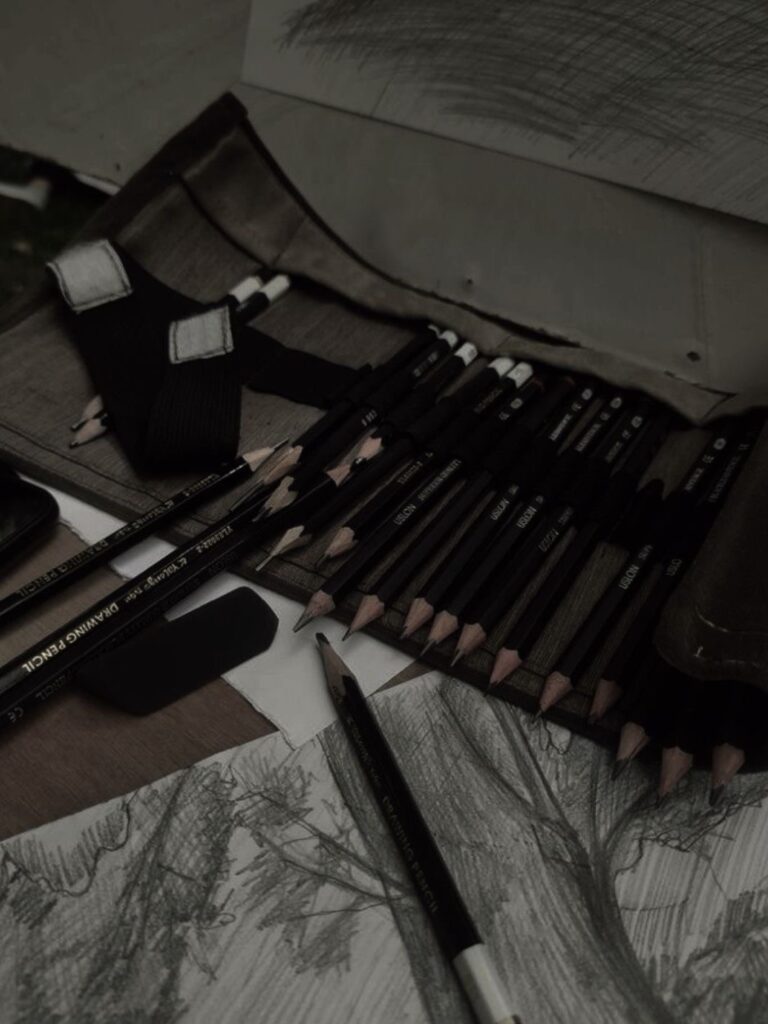
I like to sketch. I like to sketch on a train, on a bus, at school, on my bed, on the couch, on the plain. Everywhere. And I always have a sketchbook in my bag everywhere i go. Personally, sketching is my way of “meditation” because it makes me calm-even though it sometimes drives me crazy when it does not turn out good-. And there is just something about having and literally collecting my work and effort in one piece (in my sketchbook) makes me feel accountable and happy. I love seeing my progress throughout the years as I flip through my sketchbook pages. In this blog, I wanted to talk about my sketching experience and things I have learned throughout my years.
In my opinion, sketching is all about consistency. Of course being talented has a lot of advantages in being able to sketch “aesthetically pleasing” but we have to ask one question to ourselves; What makes a sketch or a drawing aesthetically pleasing? This is a huge debate topic if we think about it. Because since we are in 2026, there are variety of different aesthetics going on and maybe that even might be limiting our creativity to some extent. I will also talk about my opinion on aesthetics on my next blog but shortly, I really think that a sketch should not be aesthetic all the time. Just like could be considered as art, any scribble done on a a surface can be considered as a sketch too. As that being said, it is clear that sketching can be done on any surface. But why do I recommend investing in a sketchbook?
Having a sketchbook is crucial to see your development throughout the years. Yes, you can see see your improvement by just collecting all the random sketches you did here and there and that was what I did the past years. But in my case, that wasn’t as convenient as collecting them in my sketchbook. I lost most of them and in my opinion owning a sketchbook really helps with consistency. Knowing that you have some work done on your sketchbook really makes you actually want to keep going instead of just leaving it blank and letting it collect dust on the counter.
I would also recommend having the sketchbook somewhere near your eyesight so that it constantly reminds you to sketch more. Me personally I set goals for myself every day and the things I want to accomplish daily, and sketching is one of them. Because consistency is what improves you. Sketching every once in a while lets me improve day by day. It can even be the most basic thing ever but I still do it. Also customizing or buying a rare sketchbook might also help with being more comfortable about sketching because everybody has different styles, and customizing your sketchbook according to your specific taste can instantly change your vibe or how you feel while sketching.
Another golden tip would be having a pinterest board that contains example sketches that you would like to recreate. This, in my opinion helps with procrastination and losing yourself thinking “What am I going to draw this time?”.
Sketching, for me, is not about accuracy or aesthetics in the beginning. It is about speed—not physical speed alone, but mental speed. I think extremely fast while sketching, because I have learned that the moment I slow down, I start to overanalyze. And once that happens, motivation fades.
When I begin a sketch, it usually takes around 30 seconds for the structure or guidance to appear of what I draw. I almost start with an insanely basic form, most commonly a circle. This circle changes depending on what I am sketching, but its role stays the same: it gives me something to react to. A starting point that is intentionally simple enough to be wrong.
Once the main structure is readable, I quickly block out the larger masses of the subject. These are not precise forms, just indications of weight and direction. By this point, the silhouette is almost complete, even if the sketch itself looks raw. For me, a successful sketch is one where the silhouette works early on.
Only after this do I start playing with shadows, contrast, and texture. This is where the sketch gains depth and character. Shading is not decoration for me—it is a way to test the form. If the shadows make sense, the structure is usually correct.
I work extremely fast during this entire process because I know myself well enough to understand this: If I stop and think too much, I will start seeing flaws that are not actually problems yet. And once I focus on those too early, the desire to continue disappears. Speed protects the sketch from doubt.
Because of this, I rarely spend more than 10 to 25 minutes on a single piece. I stop once I feel satisfied enough—not when it is perfect, but when it has said what it needed to say. Sketching, for me, is not about finishing something. It is about reaching a point where the idea becomes clear.
In that sense, sketching is less about drawing and more about keeping momentum. As long as the hand keeps moving, the mind stays honest.
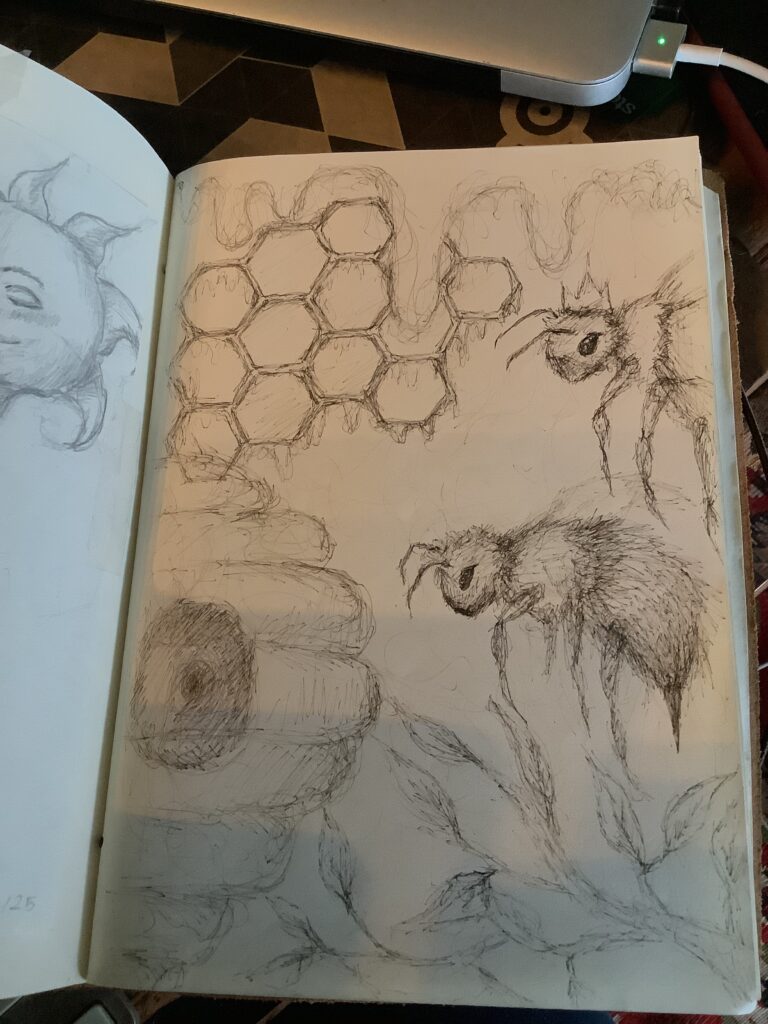
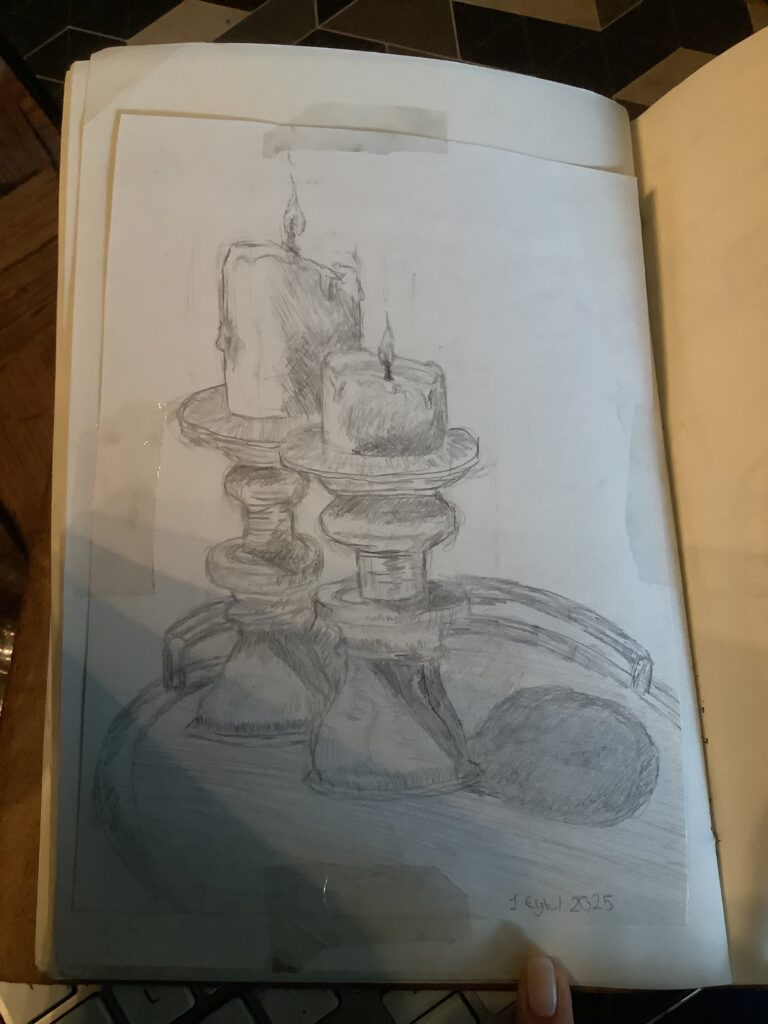
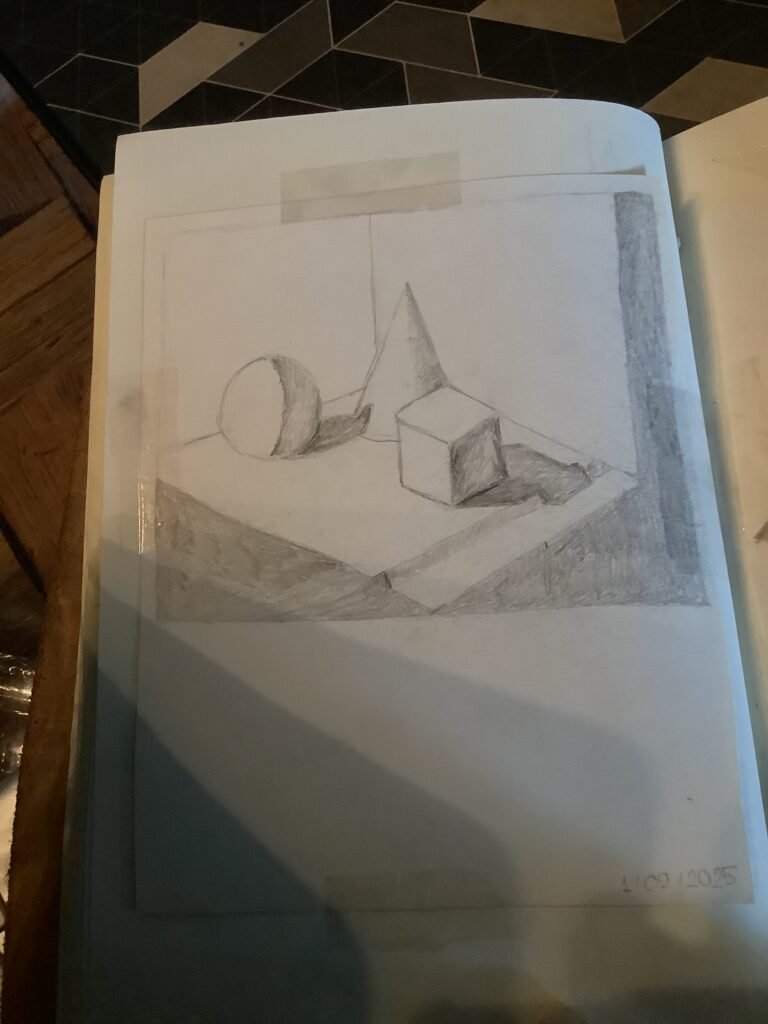
Here are some example pages from my sketchbook.

This is fantastic! Bookmarking this for later.