As someone who is half Russian, I have always been curious about the architecture that reflects this part of my heritage. In this blog, I explore the history, unique features, and cultural significance of traditional Russian architecture.
Back in the day, Russian architects were inspired by the ideas from the Byzantine Empire. These buildings had a few key characteristics such as the large central domes, thick stone/concrete walls, religious mosaics and symmetrical layouts. Buildings were made out of stone in cities however wood was frequently used in rural settlements.
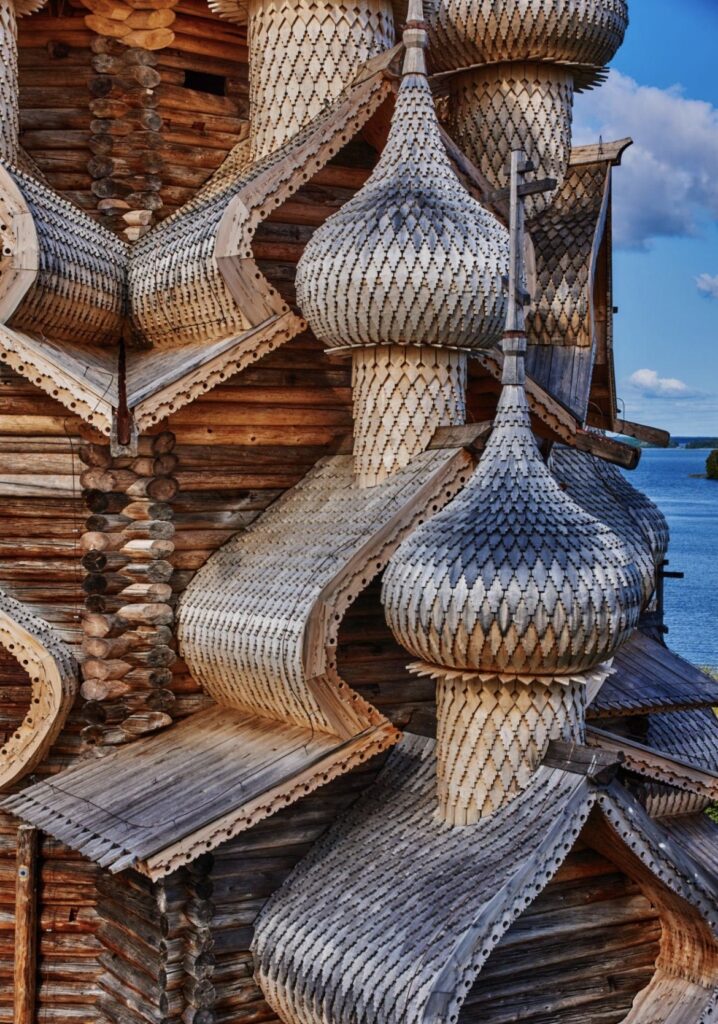
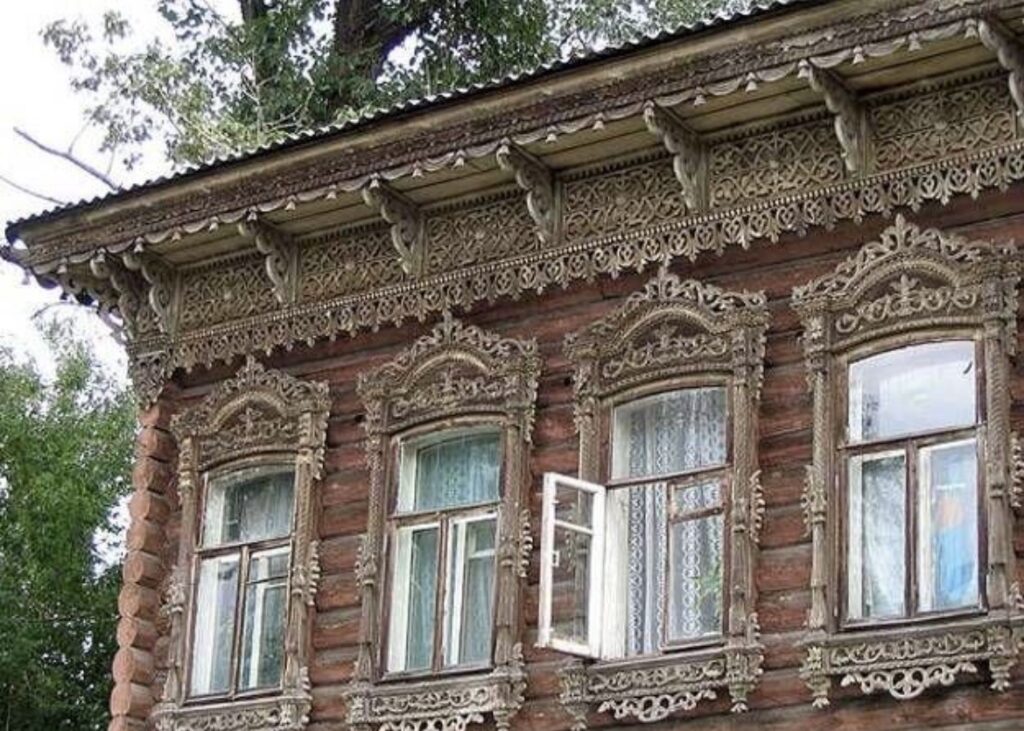
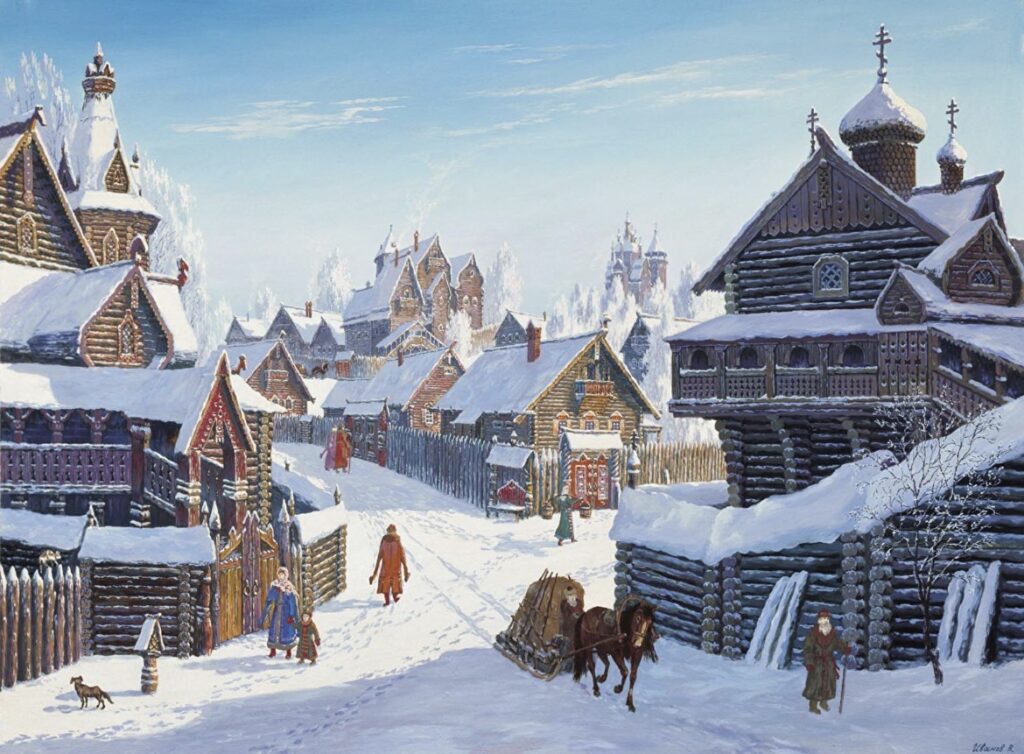
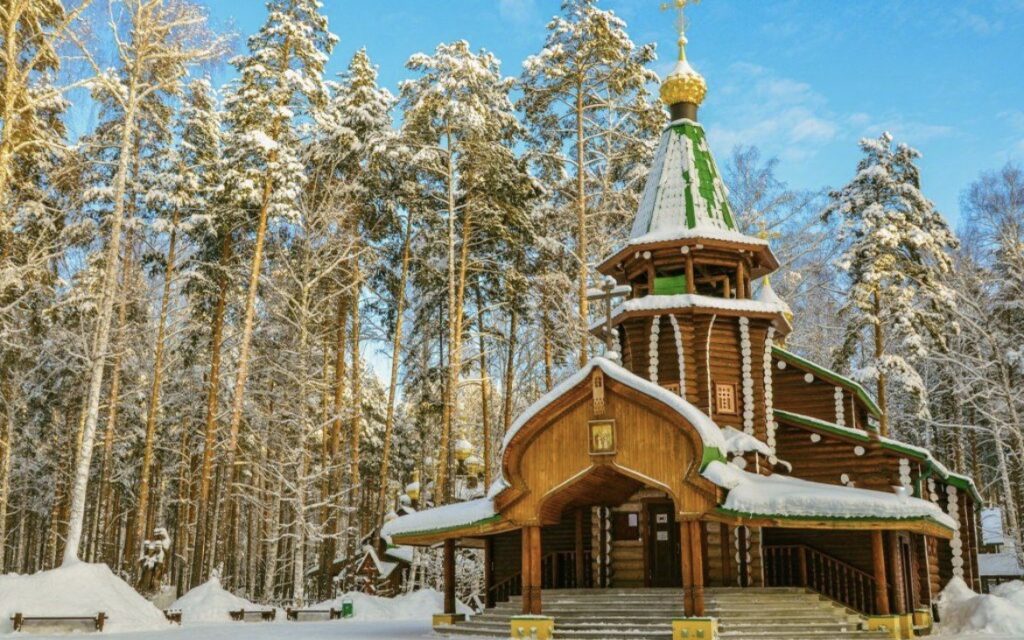
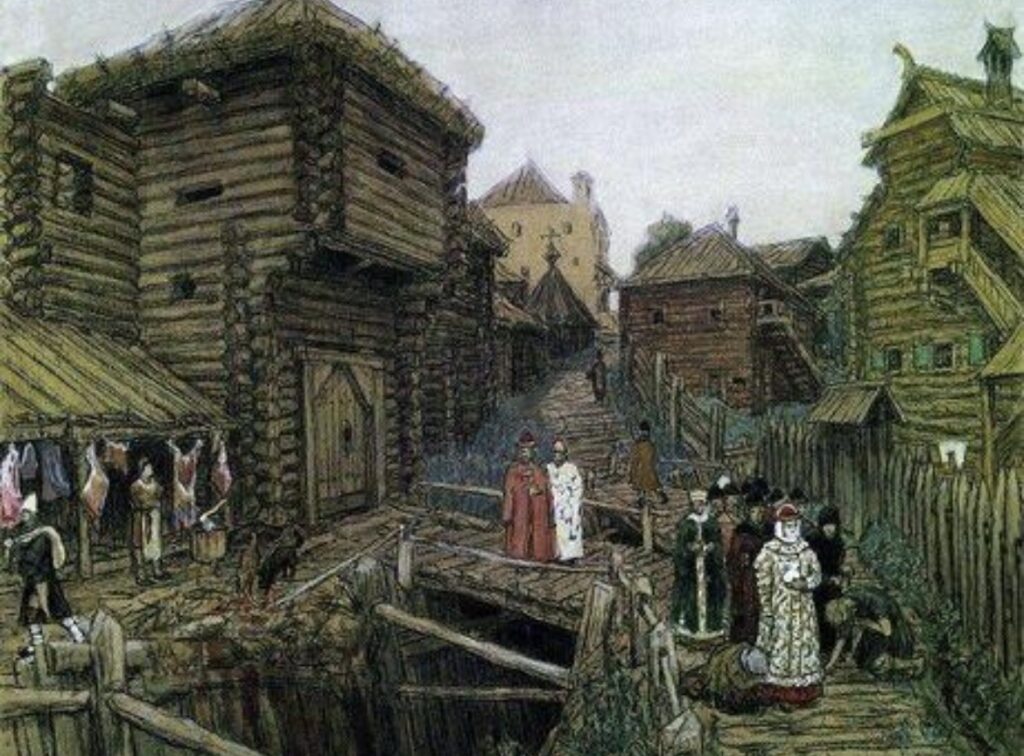
Russia has vast forests that take up a lot of space in the area. Therefore wood became a very popular material for centuries. These buildings had log construction without nails, deep roof overhangs, nalichniki (intricately carved window frames), warm interiors suited to cold winters and steep roofs to shed heavy snow. In Russia, the weather is particularly cold and there are regular snow storms. Thus, architects were intentional while building these structures. Wooden architecture is considered one of Russia’s greatest architectural traditions because builders achieved remarkable complexity using simple materials.
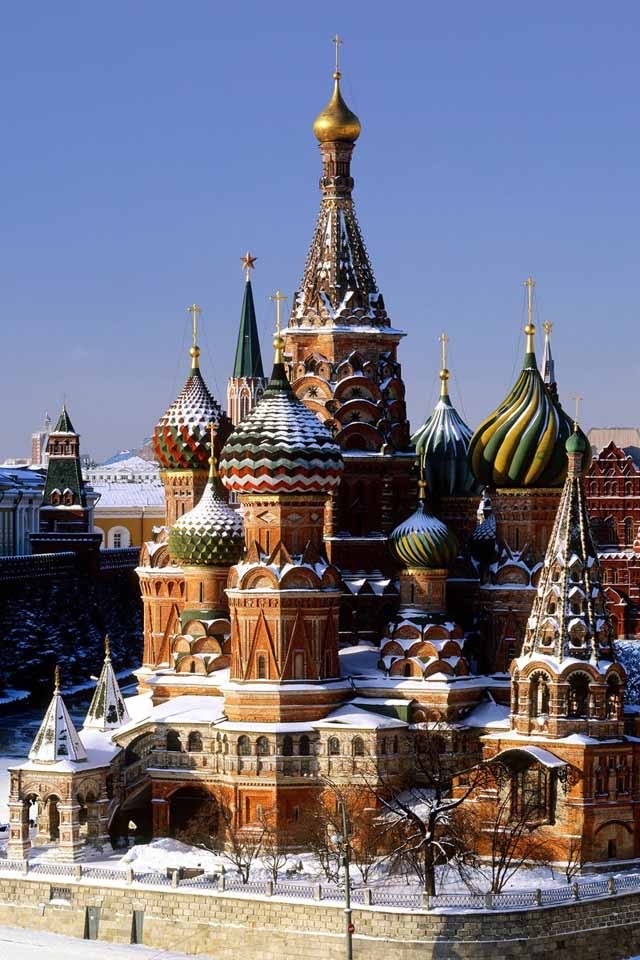
When we think about slavic/Russian architecture, the most recognizable structure would be the onion domes. These frequently appear in castles where they add the onion domes on top of the structures. These domes are onion shaped in order to make the snow slide easily off the building without causing and clumping. Additionally, the upward pointing form symbolizes reaching toward heaven. The bulbous shape became a uniquely Russian identity, different from Byzantine hemispherical domes. In these domes, different colors had different meanings too. For example gold symbolized heaven and christ, whereas blue with stars symbolized The Virgin Mary (mother of Jesus Christ).
In the 15th-17th centuries as Moscow became the capital/center of Russia, Russian architecture started to become more decorative with features like bright colors, multiple onion domes, decorative Brik patterns, rich ornamentation and white stone combined with red brick. One of the most famous examples is Saint Basil’s Cathedral, whose colorful domes have become an international symbol of Russia.
Russia’s climate influenced its architecture significantly. Architects adapted the harsh and cold weather by using thick insulating walls, steep roofs, small windows, high foundations and large heating stoves. Nearly every design choice helped building survive long, snowy winters.
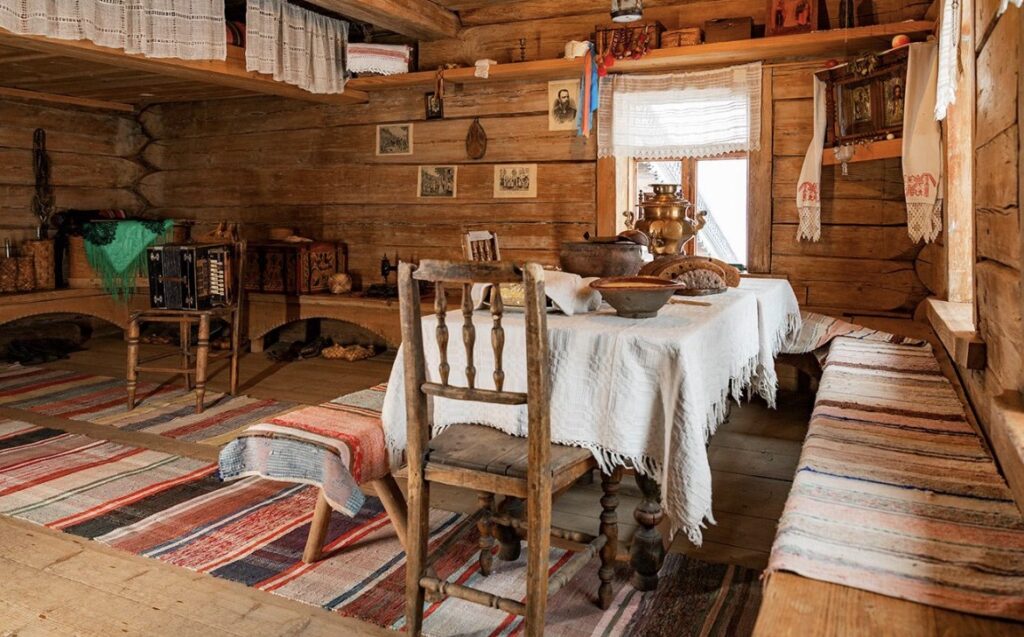
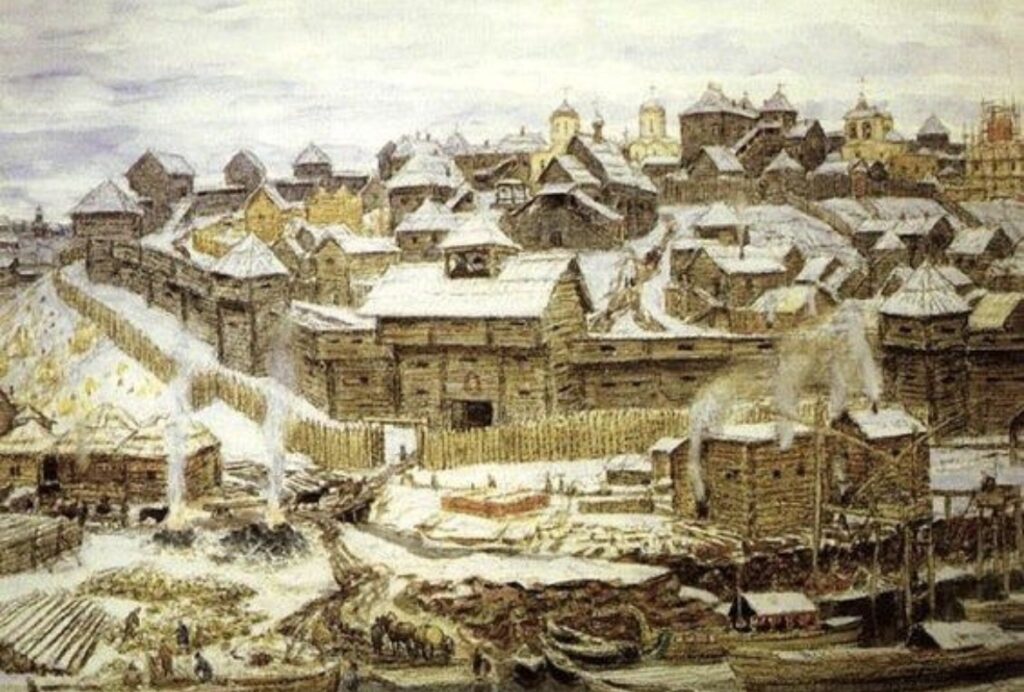
Traditional Russian homes were called Izba. These were the typical Slavic peasant houses. They were built form spine or spruce logs, large masonry stove, small windows to reduce heat loss, decorative wooden carvings and compact floor plans for warmth. The stove was the heart of the house because it provided heat, cooking facilities and even a place to sleep in Russia’s harsh climate conditions. Additionally, especially before the 18th century, fire was one of the biggest problems in traditional Slavic and Russian cities. This is because most houses were built from wood, and they were built close together, so flames could easily spread from one roof to the next. The fact that every home relied on wood-burning stove for heating and cooking, candles and oil lamps were used for lighting increased the risk of fire in the country. These fires regularly destroyed whole sections of cities including Moscow. Moscow experienced numerous fires throughout its history, destroying thousands of building in a single event. After these repeated disasters, people decided to switch to stone and brick construction in order to decrease the risk of these fires.
Slavic Russian architectural design principles were on harmony with nature, spiritual symbolism, rich ornamentation, craftsmanship, adaptation to cold climates and the strong use of color and texture. What distinguishes Slavic Russian architecture from much of Western Europe is its combination of dramatic onion domes, brightly colored church exteriors, deep connections to Orthodox Christianity and building forms carefully adapted to snowy, northern environments.