
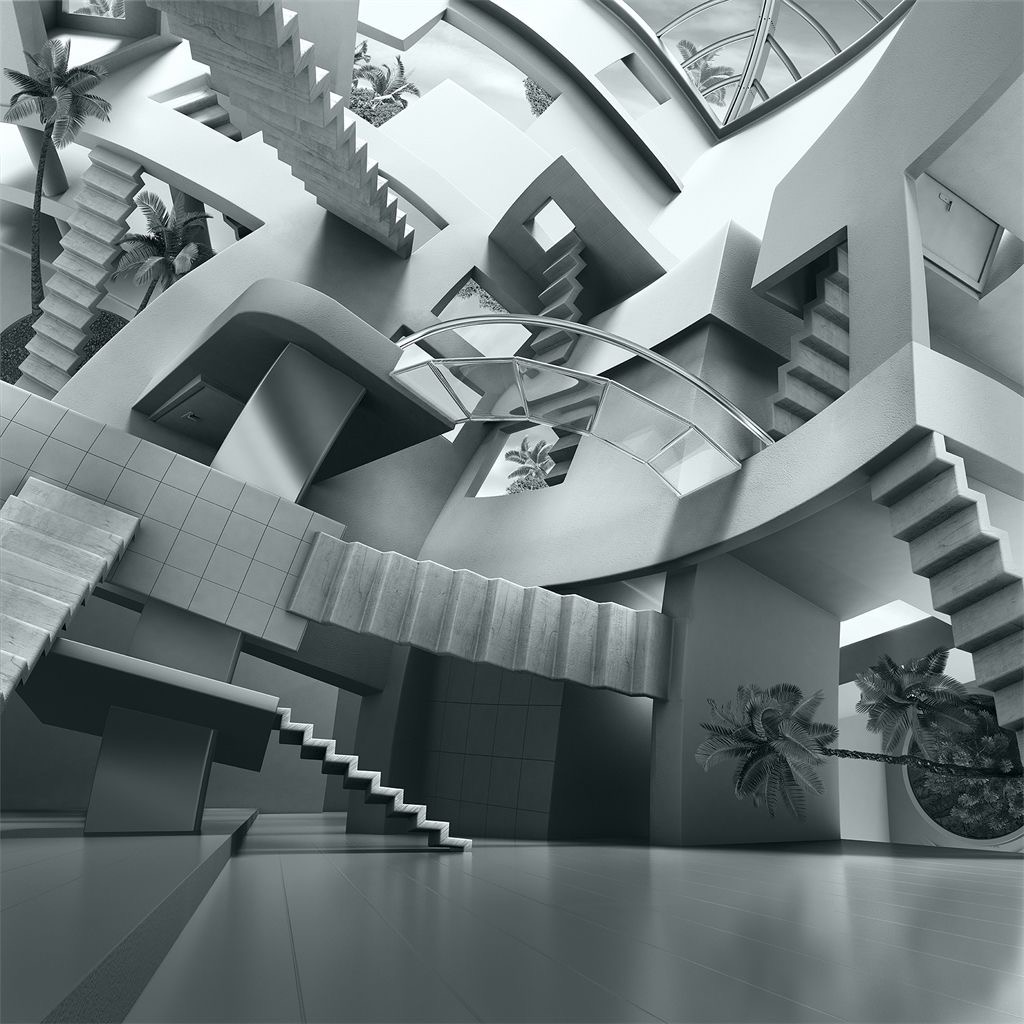
We Keep Designing Buildings for People Who Don’t Exist
There is a person architects seem to love designing for.
They are approximately average height.
They walk.
They see.
They hear.
They can reach the handle.
They understand the sign.
They don’t need to sit down.
They aren’t carrying a stroller, dragging a suitcase, using crutches, pushing a wheelchair, holding a child’s hand, recovering from an injury, getting older, overwhelmed by noise, or trying to figure out which identical corridor leads back outside.
They are remarkably convenient.
There is only one problem.
They don’t exist.
And yet we have built entire cities for them.
Look at the building you’re in right now.
Find the entrance.
Now imagine approaching it in a wheelchair.
Find the bathroom.
Imagine trying to understand where it is without being able to read the sign.
Look at the staircase.
The elevator.
The door handle.
The height of the counter.
The width of the corridor.
The lighting.
The acoustics.
The tiny step separating the sidewalk from the entrance.
Suddenly, things that looked completely ordinary become decisions.
That is what fascinates me about architecture.
A building never simply sits there.
It is constantly telling people what they can and cannot do.
A staircase says:
You may go upstairs.
Unless you cannot climb it.
A giant glass entrance says:
Come inside.
Unless you cannot figure out where the door begins.
A beautiful public plaza says:
Stay.
Unless there is nowhere comfortable to sit.
Architecture can welcome you without saying a word.
It can also reject you just as silently.
The 2-centimeter problem
Imagine a beautiful new building.
Huge windows.
Perfect concrete.
Expensive materials.
An entrance photographed so beautifully that it ends up on architecture accounts all over Instagram.
And then there is a tiny level change at the entrance.
Maybe a few centimeters.
Most people barely notice it.
Someone using a wheelchair might notice it immediately.
That’s what I find so strange.
A detail can be almost invisible to one person and completely alter the building for another.
We usually think architectural exclusion must look dramatic.
A giant staircase.
No elevator.
An obviously inaccessible entrance.
But sometimes exclusion is almost embarrassingly small.
A handle.
A threshold.
A sign.
A surface.
A sound.
A distance.
A few centimeters.
Architecture operates at the scale of entire skylines, but sometimes whether a person can use it comes down to something smaller than your phone.
Now imagine architecture disappeared for 24 hours.
Not buildings.
Rules.
For one day, forget everything we have decided a building is supposed to look like.
Forget that schools need long corridors.
Forget that museums need white walls.
Forget that offices need desks arranged in rows.
Forget that entrances need stairs leading toward enormous doors.
Forget that accessibility means attaching a ramp to the side after the building has already been designed.
Start with bodies instead.
A child.
Someone who is 190 centimeters tall.
Someone who is 120.
Someone carrying groceries.
Someone who cannot see.
Someone who cannot hear.
Someone using a wheelchair.
Someone with a broken leg.
Someone who is exhausted.
Someone who needs silence.
Someone who needs directions.
Someone who needs somewhere to stop.
Now design.
What would change?
Probably more than the ramp.
Maybe the problem is the word “accessible.”
When we hear accessible architecture, it is easy to imagine a checklist.
Ramp?
Check.
Elevator?
Check.
Accessible bathroom?
Check.
Done.
But that interpretation makes accessibility sound like an additional feature.
Almost like adding solar panels.
Or bicycle parking.
Or another material option.
But people aren’t optional features of buildings.
So why is designing for different kinds of people treated as a special category of design?
Maybe the more interesting question isn’t:
“How do we make this building accessible?”
Maybe it is:
“Why did we design something inaccessible in the first place?”
That tiny change in language completely changes where responsibility sits.
There is another problem.
Some inaccessible buildings are beautiful.
Very beautiful.
And that’s uncomfortable.
Because architecture loves images.
We photograph buildings when they are empty.
Perfect sunlight.
Perfect furniture.
No backpacks.
No wheelchairs.
No delivery carts.
No screaming children.
No elderly person slowly crossing the lobby.
No one trying to find the bathroom.
No one actually using the architecture.
Sometimes the photograph becomes more important than the life happening inside it.
A building can look extraordinary in a photograph while being frustrating to inhabit.
Which raises a question I keep coming back to:
If a building photographs beautifully but fails the people using it, is it actually good architecture?
I don’t think beauty and accessibility are opposites.
I think that question misunderstands both.
The most interesting architecture should be able to do both.
Try this experiment.
Next time you enter a public building, don’t look at it as yourself.
Choose someone else.
Imagine you are eight years old.
Where do your eyes land?
Can you reach everything?
Now imagine you are eighty.
How far is the next seat?
Now imagine you cannot hear.
How much information disappears?
Now imagine you cannot see.
Can you understand the building through touch, sound and movement?
Now imagine you are using a wheelchair.
Don’t just search for the ramp.
Try to experience the entire building.
Entrance.
Door.
Counter.
Bathroom.
Elevator.
Table.
Exit.
Suddenly architecture becomes a completely different subject.
You stop seeing walls.
You start seeing permissions.
And that may be architecture’s quietest form of power.
We usually talk about architecture as an art of creating space.
Maybe it is also an art of deciding who gets to use space easily.
Every door has dimensions.
Every staircase has an alternative—or doesn’t.
Every bench has a height.
Every sign has a size.
Every corridor has a width.
Every entrance has a route.
Someone decided each one.
Most of those decisions will never be noticed by the people they work perfectly for.
They become visible when they fail.
And perhaps that is why accessibility deserves far more attention from young designers.
Because the question isn’t only:
What should the future look like?
It is:
Who gets to enter it?
I started paying attention to architecture because I loved buildings.
The more I learn about it, though, the less interested I am in buildings by themselves.
I’m interested in what buildings do to people.
Who feels comfortable.
Who gets lost.
Who has to ask for help.
Who can move independently.
Who gets the beautiful entrance.
And who gets directed around the back.
Because eventually every architect has to answer the same question, whether they realize they are answering it or not:
Who did you imagine when you designed this?
And perhaps the most dangerous answer is:
Someone like me.
