African architecture is one of the most misunderstood architectural traditions. Africa is a huge continent, which has 54 countries, thousands of ethnic groups, and vastly different climates. African architecture is often judged by its materials instead of its intelligence.
Here are my questions; Why do people immediately think glass skyscrapers represent progress? Why do they assume mud means poverty?
Earth is not a primitive material. This is one of the biggest misconceptions. Concrete is not automatically superior either. Earth can breathe, store heat (and releases it slowly), its recyclable, almost no transportation energy, and ile even blends into the nature. These features can not be seen in those cool glass skyscrapers do they? Yet still, many people have the audacity to call it ‘old’. I think this is worth questioning.
Africa has a very harsh climate. The temperatures are extremely high and it is very dry. One of the most important feature of African architecture is that climate shaped their buildings. African builders asked themselves: “How can the building cool itself?”. Not “How can I build the most futuristic façade?” And leaving the cooling job to the AC. I believe modern architecture could (and should) learn from this. We see countless headlines about sustainability and making a “change,” but how often do we actually see architects looking back at centuries-old solutions that already worked? Many people today claim that technology has advanced to the point where we no longer need to build with earth. But if that’s true, why do so many modern skyscrapers still depend on energy-intensive air conditioning systems to stay habitable? Perhaps the problem isn’t that traditional materials are outdated—perhaps we’ve forgotten how to design buildings that work with the climate rather than against it.
This is precisely why African architecture deserves more recognition. Rather than fighting against climate using mechanical systems, it untaxed the environment and allows the building itself to become part of the solution.
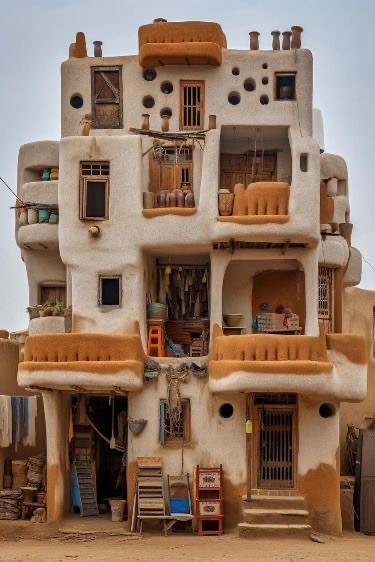
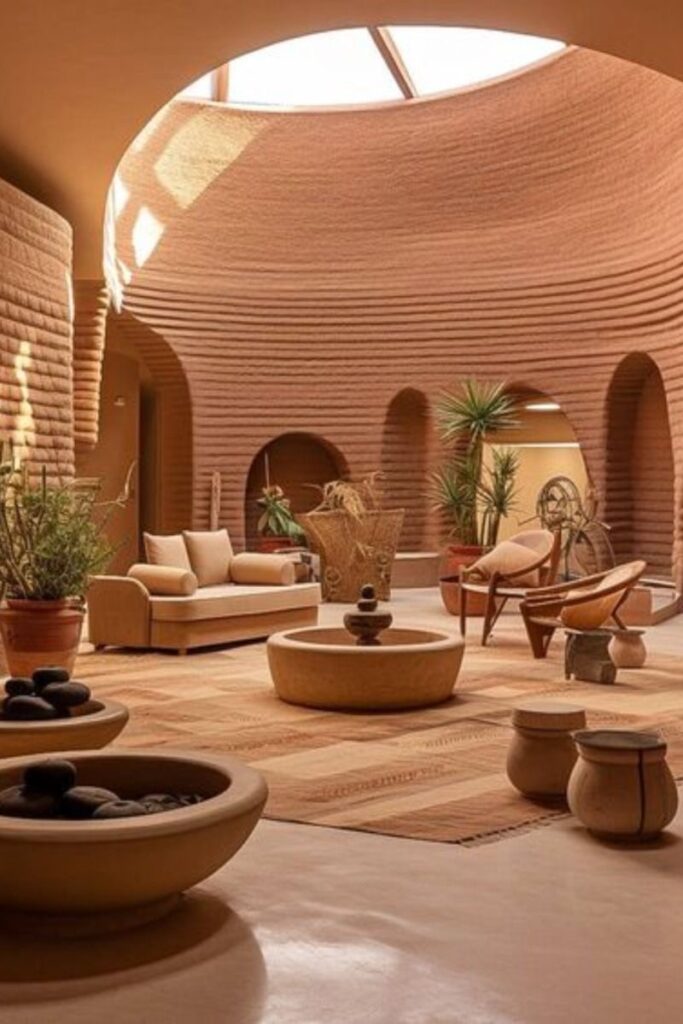
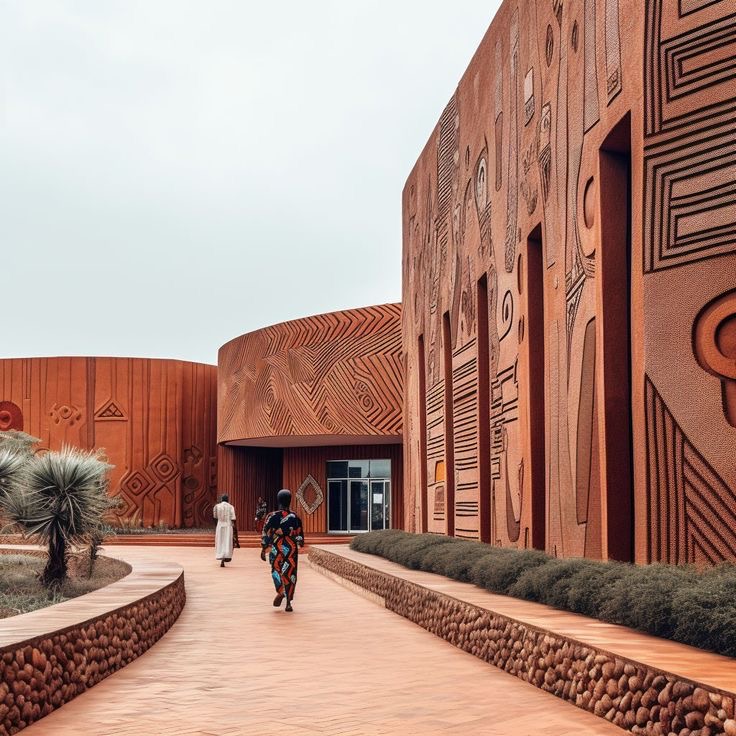
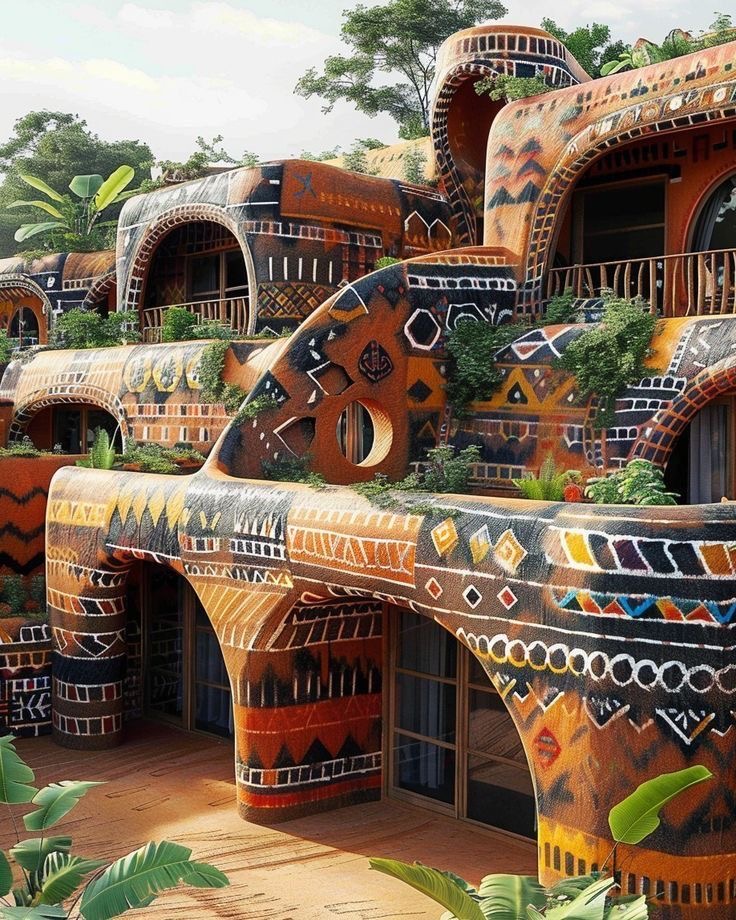
Beyond its environmental performance, African architecture has a unique visual language. The most recognizable feature would be the organic forms of their buildings. The walls are usually rounded instead of sharp corners. This is mostly because it is taker to build with earth and also the curved walls distribute structural loads better. They used earth as the main material since it was cheap, easily available, is a good thermal mass and has a low environmental impact. These materials include adobe (sun-dried mud bricks), rammed earth, clay, stone (in some regions) and timber. In Africa, patterns often have a meaning rather than being purely decorative. Decoration is frequently handmade and these are made symbolizing family identity, tribal identity, spiritual beliefs, nature, protection, and storytelling. I have already talked a lot about the climate-responsive design so I will not go deep into the function but structurally they often used thick walls, small windows (best for hot climates), courtyards, high ceilings (in some regions), natural cross ventilation, and deep overhangs to minimize direct sunlight, reduce indoor temperatures and improve airflow.
African architecture is incredibly diverse, with each region developing styles that respond to its own climate, culture, and available materials. West Africa is known for its impressive earthen buildings, while North Africa features courtyards, arches, and geometric Islamic influences designed to cope with the desert climate. East Africa, particularly along the Swahili Coast, combines African, Arab, and Persian influences through coral stone buildings and carved wooden details. In Southern Africa, traditional circular thatched huts and remarkable stone structures like Great Zimbabwe reflect the region’s unique history, resources, and engineering traditions.
In the broader context, African architecture demonstrates that sustainability is not a new concept. Long before environmental design became a global priority, communities across Africa were already creating buildings that responded to their climate, used local materials, and reflected their culture. I think this is something modern architecture could learn from more often. Instead of always searching for the next technological breakthrough, perhaps we should also pay closer attention to the ideas that have quietly worked for centuries.