
Lately I have been reading a book called Fahrenheit 451. And I couldn’t help myself but wonder how I can integrate this concept into a design or combine it with architecture. Because in my opinion, every design that an architect creates, has hints of their daily life in it. Just like how an author gets inspired by his/her daily life and put that idea in their book. I decided that I could do the same thing getting inspired from this book, and then I carefully recognized the symbols and the deeper meanings, figured out how I can include the symbol or the idea in a design. I want to call this design ‘The Building of Awakening’. Here is my thinking process down below.
Architecture often reflects how people think and live. Buildings are not only physical spaces, but also emotional and psychological ones. In Fahrenheit 451, Ray Bradbury shows a society that looks comfortable and safe on the outside, but is empty and controlled on the inside. This project turns that idea into architecture by designing a building that represents Guy Montag’s mind before and after he begins to question the world around him.
Exterior Design: A Calm but Controlled World
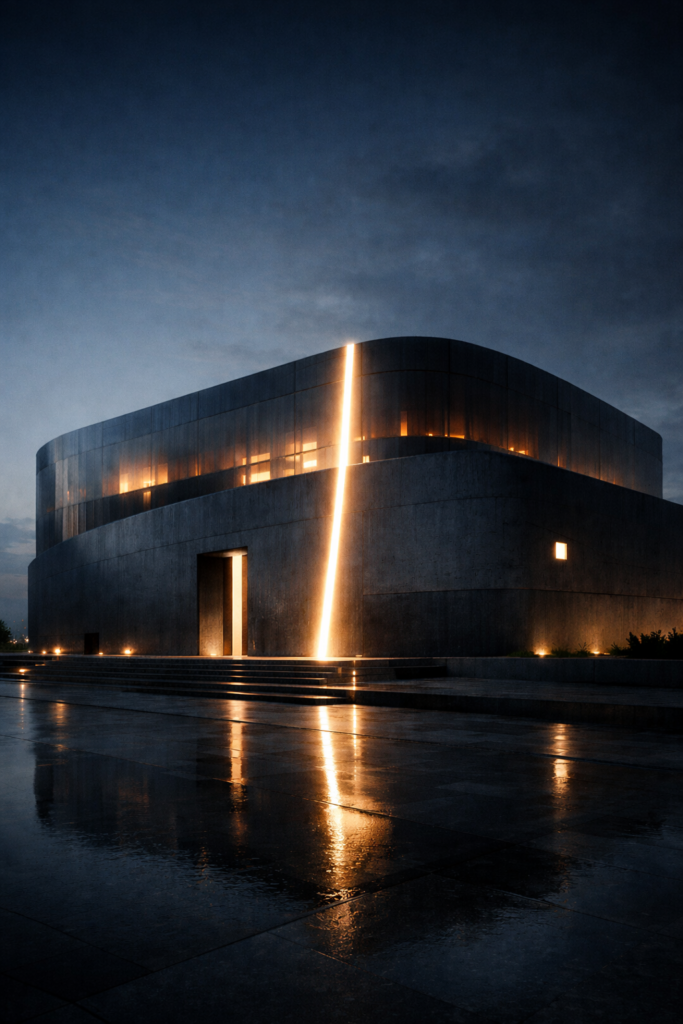
The exterior of the building represents the society in the book and Montag’s life before he meets Clarisse. At first glance, the building looks smooth, quiet, and stable. It does not feel dangerous or aggressive. Instead, it feels calm and protective, which matches how the society in the book keeps people comfortable so they do not question anything.
The building has a large, solid form with very few openings. The walls are thick and continuous, making the structure feel closed and sealed. Light enters only through small and controlled openings, never fully revealing what is inside. This shows how information in the society exists, but only in limited and controlled ways.
The materials are dark and heavy, absorbing light rather than reflecting it. This makes the building feel serious and unquestionable. From the outside, everything seems normal and complete, just like Montag’s life before he starts thinking for himself.
Cut through this calm exterior is a thin, seamless crack running through the building. This crack represents the moment Montag begins to change after meeting Clarisse. It is not loud or destructive, but quiet and precise. A bright, unfiltered light shines from within the crack, symbolizing awareness and clarity entering his mind. Even though the building remains standing and controlled, it is no longer the same.
Interior Design: A Hidden Library of Thought
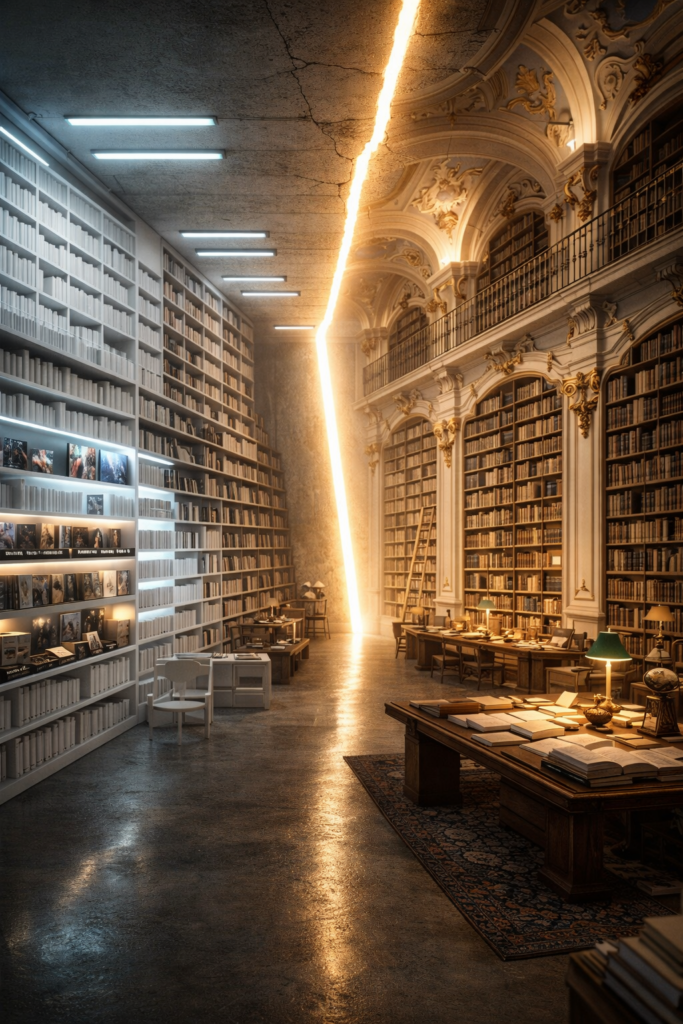
Inside the building is a large hidden library that represents Montag’s inner world. This space is secret because books and real thinking are not allowed in society. The library is very large and tall, similar to classic academic libraries, to show the importance and power of knowledge.
The interior is divided into two different worlds that represent two sides of Montag’s mind.
The Unconscious Side: Empty and Meaningless
One side of the interior represents the society Montag comes from. This side is white, clean, and very organized, but also cold and empty. The shelves are filled with blank books, magazines, and visual content that looks good but has no real meaning.
The lighting is bright and even, with no shadows. This kind of light removes depth and emotion, making everything feel flat. The space is large, but it feels mentally empty because there is nothing to truly think about. This side shows a world full of information but without understanding.
The Awake Side: Thought and Curiosity
The other side of the library represents awakening and curiosity, influenced by Clarisse. This side is warm, detailed, and full of real books. The shelves are tall and layered, with ladders and reading tables that encourage people to slow down and think.
The materials here feel older and more natural, such as wood and stone. The lighting is softer and more focused, creating shadows and depth. This space feels quiet and respectful, showing the importance of learning and memory. This is where Montag begins to truly read and question the world around him.
A Mind in Between
These two sides are not completely separated. They slowly mix into each other, just like Montag’s thoughts. The bright crack from the exterior continues into the interior, cutting through the library and connecting both worlds. Some meaningless shelves begin to hold real books, and modern elements appear next to old ones. This shows that Montag is changing, but he is not fully transformed yet.
Conclusion
This building tells the story of Fahrenheit 451 through space instead of words. The exterior shows a controlled and comfortable society, while the interior reveals a hidden world of thought and learning. The crack represents Montag’s awakening and the moment he begins to see clearly. Through architecture, this project shows how powerful ideas and books can change the way a person thinks and lives.

this is a very good design. i read that book about two years ago and thinking back, i have never realised some of these details. good job
thanks for supporting!
Hey so I checked your page and I really think your work is extremely impressive for a 15 year old. Keep going! You are an inspiration that age doesn’t matter when it comes to creativity. Great job!
i really appreciate your support!!
This is so inspiring! Love your perspective.