
Sometimes, I really doubt wether some pieces are even considerable as a furniture or an interior object that serves its job. In design, function is supposed to be non-negotiable. A chair exists to be sat on, and a table exists to support. Why buy something if it doesn’t serve its job? That was exactly the question that led me to write this blog.
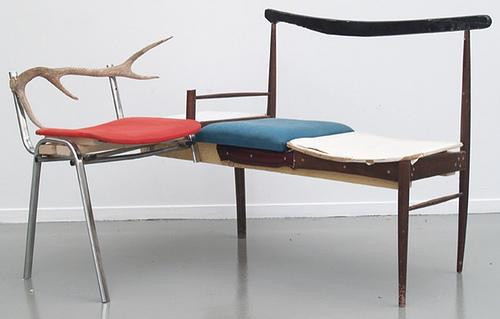
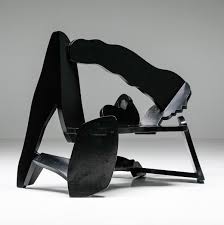
Architecture and interior objects are traditionally measured by how well they serve the human body. Yet is the architecture and design world, this rule often gets broken. Many designs tend to borrow the appearance of furniture while rejecting its purpose. At that point, the object no longer serves the user, but ironically confronts them. Which is the exact opposite of what it is supposed to do. Now this, is when design crosses into artwork. Two of some extreme examples that support my idea are the works of Gelitin (the sculptural chair) and the Aphrodite Chair by Allen Jones. Both pieces visually resemble the furniture, yet they both seem not to serve the human body, but fight against it. As it is very clear by the pictures, both of the chairs are extremely uncomfortable because not only of its texture, but also its form. The artistic and unique touches might make the object/design seem interesting an they could be added. However there is a thin line that should not be crossed in doing so.
Gelitin’s chair appears to be constructed from two chairs fused into one impossible form. At first glance it seems playful. But the more the viewer looks into the design, the more confusing it might get. There is no orientation. No defined seat, no logical backrest. The object offers multiple suggestions of how it might be used, yet every option fails. The human body craves comfort, an doing so, it looks for an option that can serve it. It depends on cues: where to sit, how to lean, where the weight should be distributed. Gelitin removes all these cues and the result is an object that technically resembles a chair but provides no functional agreement with the body. Gelitin’s work suggests that furniture does not have to obey us- and that realization alone is enough to make the object unusable. Even if it is somehow used, it is a fact that it is not comfortable. There seems to be a deer antler in the back of the red chair. This piece is probably done by random objects fixed together and hoped to create harmony. I am not saying that this is a bad design, my point is that for a design to be usable and can be labeled as a ‘furniture’, it has to fit some essential criteria that would bring it to the ‘furniture’ category.
In the other hand, we have Allen Janes’ work. This piece seems to be crafted by wood and carefully formed into a geometrical shape that is supposed to serve a chairs purpose. As doing so, there are many thoughts on this geometrical structure that confuses a lot of people. In my opinion, this chair might be used as a chair but the chair is missing one purpose; comfort. So you see, that is when texture comes into the play. Many artists don’t think about this while creating their art. They do not think about the person that it is actually going to buy and use it. Some only focus on texture, but most only focus on form. In a design (that is going to be used in daily life of course) both form and function should be considered as an important criteria before putting the product on sale. But this does not mean that the product is going to be ‘unusable’ forever. Small adjustments can really shape and transform the designs overall rating on both comfort and form if done correctly. Maybe adding small cushions or paddings can significantly elevate the chair comfort and usage without really changing its form and uniqueness.
To sum up, in my opinion architecture and design has a lot of criteria that needs to be considered while coming up with the products. When a design serves both form and function in the right way, that is when a good creation comes to life. And even small changes that are made in the product can really elevate its use and function, making it easier to use. Understanding how to use these tools correctly is one of the biggest lessons a designer/architect can ever learn.

This is really helpful, thanks for sharing!
Really enjoyed reading this. Great job!