
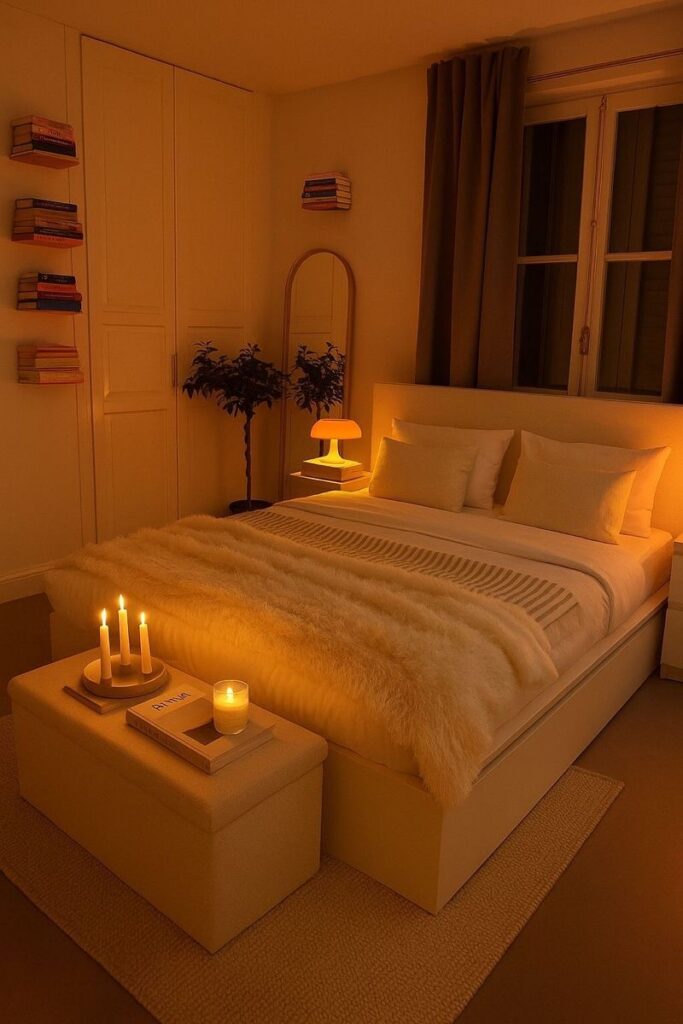
Architecture is often understood through space and shapes, yet people do not see the importance of light in architecture. The same structure can often be seen differently throughout the day, due to the variety of different lighting seen throughout the day. Under sunset, under sharp daylight, sunrise and a lot more. It is almost like we have ‘modes’ to our houses. Using lighting to create a certain vibe is often used by interior architects. This is a very common trick to make people feel ‘home’ even if they are not actually in their own house.
Light temperature, measured in Kelvin (K), affects both how a space feels and how the brain responds to it. Warm light (2700–3000K) helps the body relax by reducing alertness, which is why it is best suited for bedrooms and resting areas. Neutral light (3500–4000K) provides balance and clarity, making it ideal for kitchens and everyday living spaces. Cooler light (4500–6500K) increases focus and alertness by stimulating the brain, and is therefore commonly used in schools, studios, and workspaces. Choosing the right Kelvin value allows lighting to support the intended function of a space rather than work against it.
In my opinion, knowing and mastering lighting skills can really elevate a space and it is a very powerful and useful tool to use for architects. In architecture, lighting is not a secondary element but a defining force; it shapes how space is perceived, experienced, and remembered, often with more impact than form itself.

This is exactly what I needed to read today!