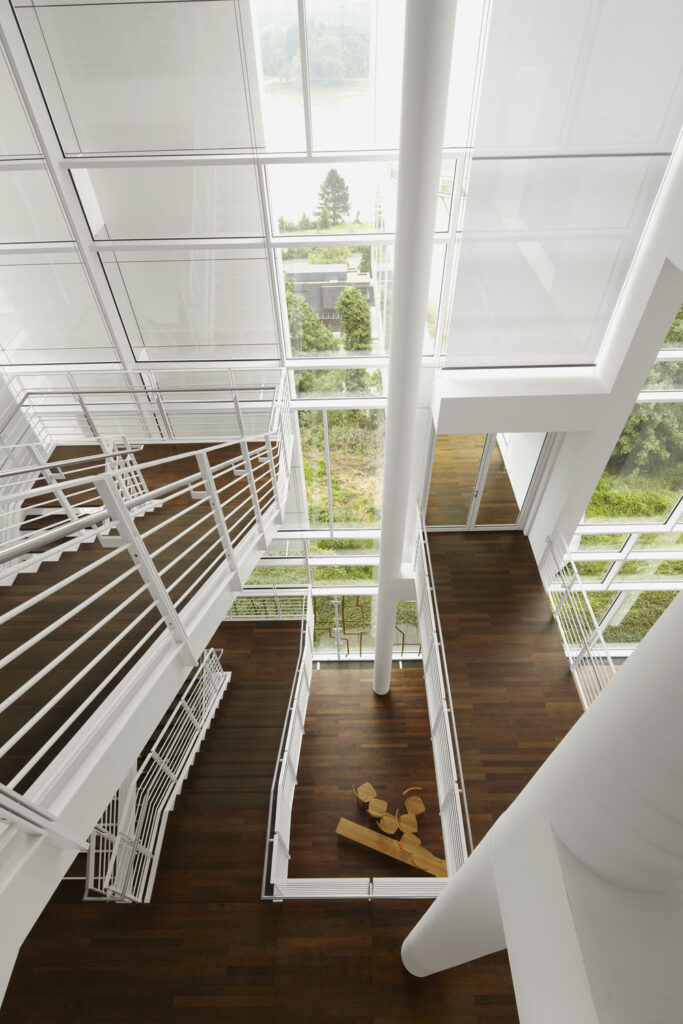
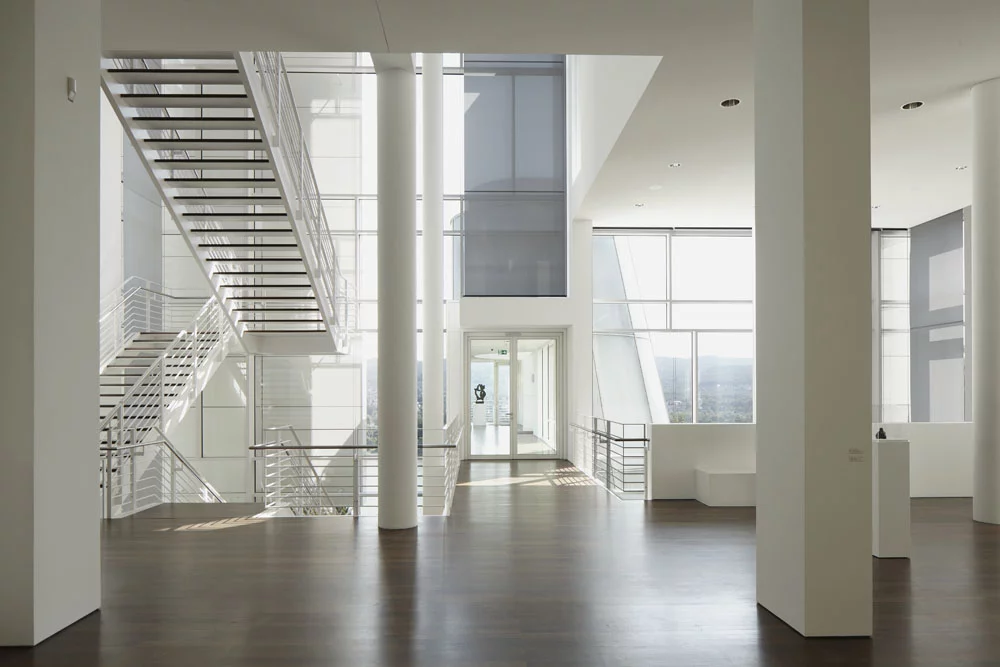
Richard Meier, the famous architect is known for his style of basic geometrical shapes and basic but modern designing skills, which stands out in some ways particularly. When I was going through his works I realized how he mostly used a white color scheme. White is not a decoration for him. It is a tool to reflect light. It makes shadows, proportions and geometry more visible. It creates a sense of purity, clarity and order. He often said white allows architecture to be read “without noise”. He sees light as a design element, not just illumination. By using large glass walls, skylight and controlled daylight that changes throughout the day, he allows spaces to feel calm, intellectual and almost spiritual. His buildings are easy to read. He mostly uses white concrete, glass and white-painted metal panels in his works with often light-toned stone used very carefully. He uses minimal texture and let the form and light do the work for him. Studying his work can make you learn spatial logic, composition, light control and discipline in design. We can clearly see this in his work “Arp Museum” which I am going to talk about today.
The Arp Museum is a modern art museum located in Rolandseck, Germany. Designed by Richard Meier and completed in 2005, the museum was built to house the works of Hans Arp and Sophie Arp, the two key figures of modern art and Dadaism. Dadaism is a radical rejection to traditional art, logic and social values, created as a protest against war, since it emerged during World War I, mainly in Zurich, Switzerland. The museum has a white modernism, strict geometry and light-driven style as any other work of Meier. Continuous ramps and layered galleries caught my eye. Its conceptual importance is that it is an example of sensitive modern architecture integrated into landscape and history.
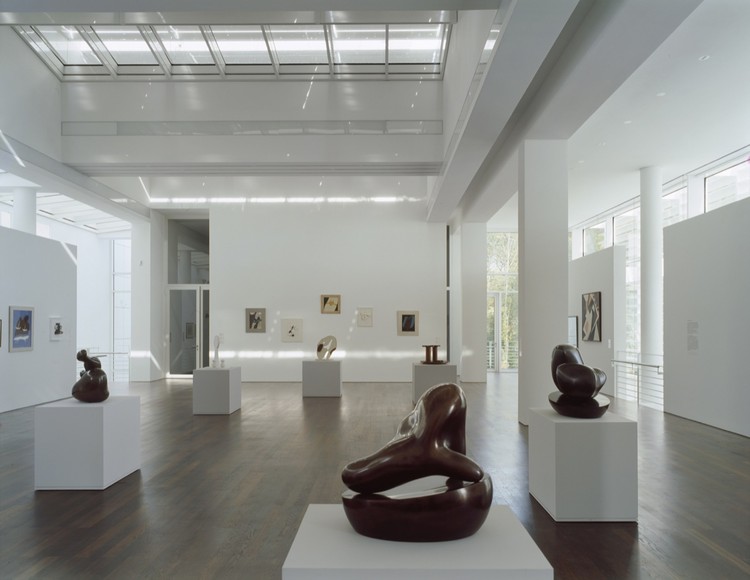
In my opinion, this style is very unique but simple. I really like the white concept and the use of it can have huge benefits, especially to a museum. The use of white architecture in Arp Museum is especially suitable for the art of Hans Arp and Sophie Arp, and this is not accidental. It works on both a visual and a conceptual level. Visually, white surfaces create a neutral, silent background. Arp’s sculptures often rely on soft, organic forms and subtle shadows rather than strong color or surface texture. When placed against white walls, these forms become clearer and the it draws the viewers attention only on the artwork. It reduces distraction and keeps the focus on the piece.
Conceptually, this neutrality also aligns with the spirit of Dadaism. Dada rejected traditional artistic rules and decorative excess. A white and undecorated architectural setting does not impose meaning or symbolism on the artworks; instead, it allows the works to exist freely. White also supports the idea of chance and movement, which were central to Hans Arp’s process. As daylight shifts throughout the day, shadows change slowly on white surfaces, meaning the artworks are never perceived the same way twice. This actually combines with Dadaism’s interest in randomness and process rather than fixed ones.
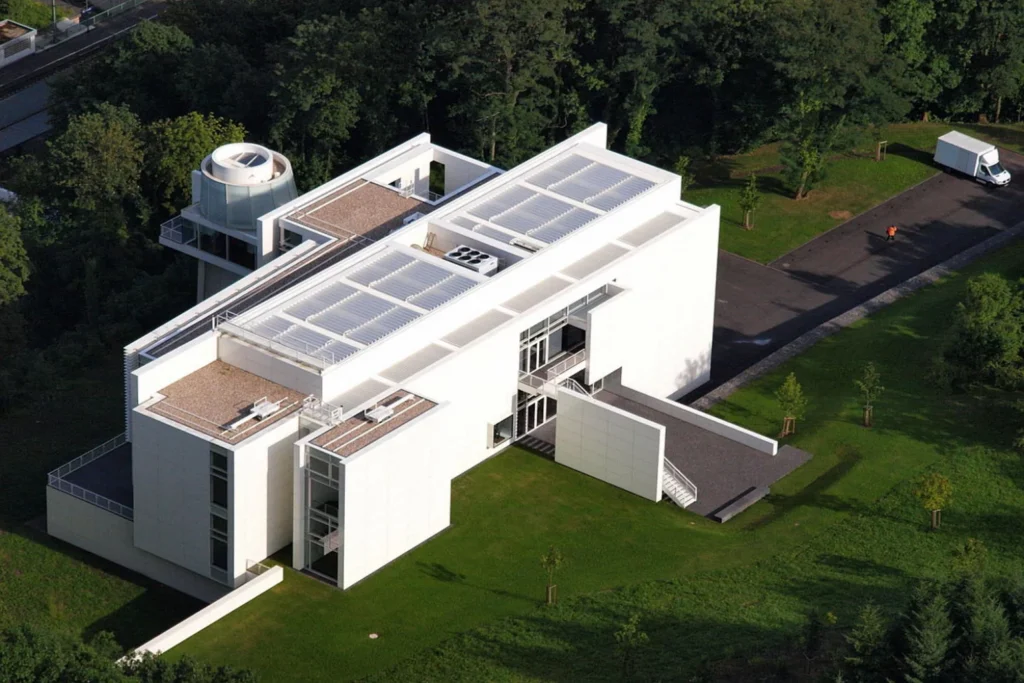
Although this style really makes me feel placid and relaxed, and I think it is a perfect idea for the museum, there are some things that I would personally change. With picking this style, there are some problems that come with it. I criticize the way how the white exterior ages in reality. Sure, it can look magnificent in its early years, however it also made me question the future version of it. While the building is designed to express clarity and elegance through white surfaces, the same choice makes the museum vulnerable to dirt, weathering and discoloration by time. Because the museum sits near the Rhine River and is partially embedded in a hillside, its exterior is constantly exposed to moisture, airborne pollution and biological growth such as algae. On white surfaces, even minor stains become immediately visible, causing the building to lose the crispness and refinement that white architecture relies on. A simple fix is to protect the white outside walls with a clear coating that stops dirt and water from sticking to the surface. This keeps the building looking clean and white for longer without changing how it looks. Rain can then wash most dirt away, and the museum does not need to be cleaned as often, helping it keep its clean and elegant appearance.
Finally, white reinforces clarity and focus. Sophie Arp’s geometric and abstract works depend on precision and balance. In a visually reduced space, viewers can concentrate on proportion and form without the visual “noise”. This way, two arts do not compete against each other (Architecture vs. Dadaism). They work together and create harmony, not stealing each others attention or causing distractions. The building creates the ideal conditions for art that questions rules, values freedom and resists unnecessary meaning.