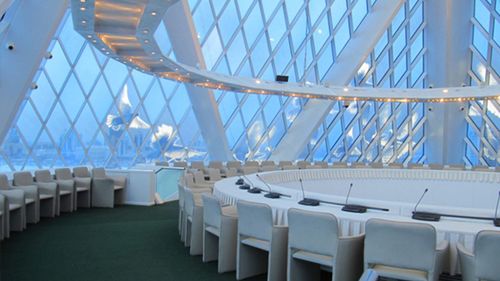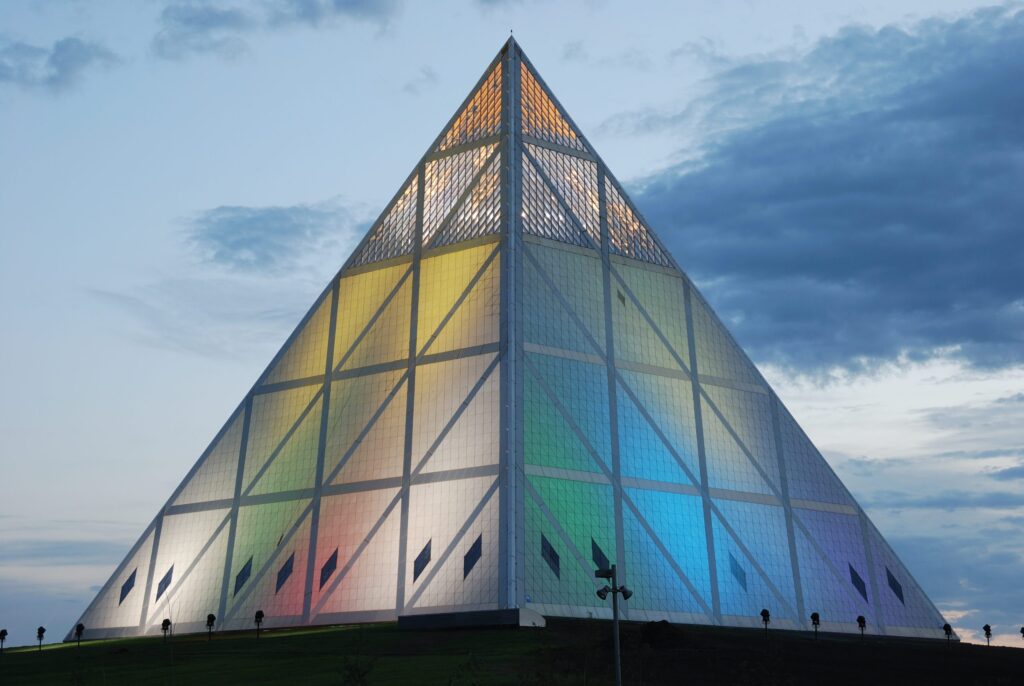
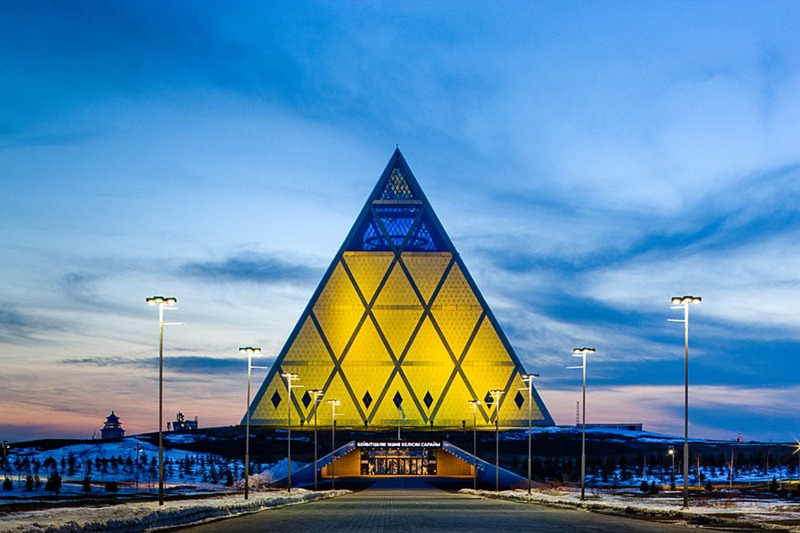
The Palace of Peace and Reconciliation, also translated to Pyramid of Peace really caught my eye. It is located on Astana, the capital of Kazakhstan and serves as a meeting space for government officials, and also the room in the top of the pyramid serves as a convening place for the Congress of The Leaders of World and Traditional Religions. In addition, the palace houses 1,500 seat opera house, educational facilities and a national centre for the country’s various ethnic and geographical groups. It was meant to be a symbol of peace, unity and understanding between various religions, cultures, and cultural backgrounds. The building brings together leaders of many faiths to discuss cooperation and harmony.
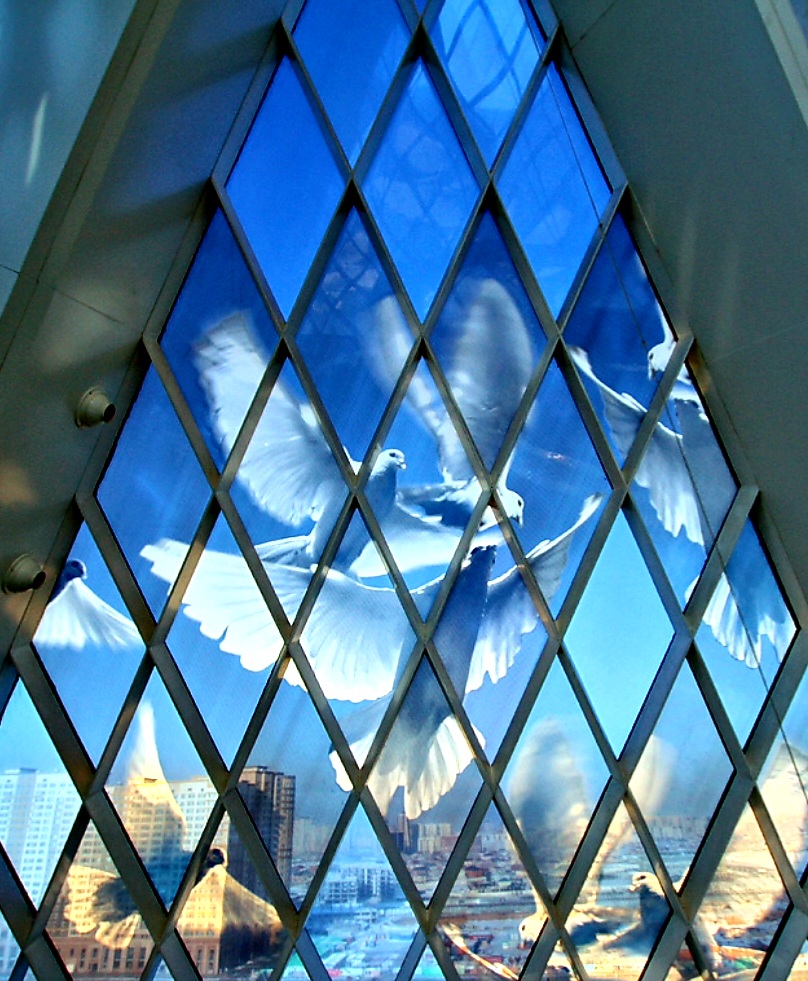
The building’s shape is a pyramid. The reason behind this is because pyramid symbolizes unity and openness, also it is because ancient shapes were often associated with spirituality and strength. At the top of the glass pyramid, there is a magnificent stained glass artwork showing 130 doves. These doves tend to represent the ethnic groups living in Kazakstan.
In my opinion, Foster did an insanely good work on this structure. I really like the way he combined both technology and futuristic ideas with ancient symbols. And the 130 doves adds a very soft but powerful touch to the building. The Palace of Peace and Reconciliation is a powerful example of how architecture can communicate ideas, not just function. The pyramid form is very simple but has a very deep and thoughtful meaning to it. However, the scale can feel a bit intimidating, and the building sometimes feels more symbolic than warm. Still, I think it succeeds as a landmark because it turns an abstract idea like peace into a physical space that brings people together.