
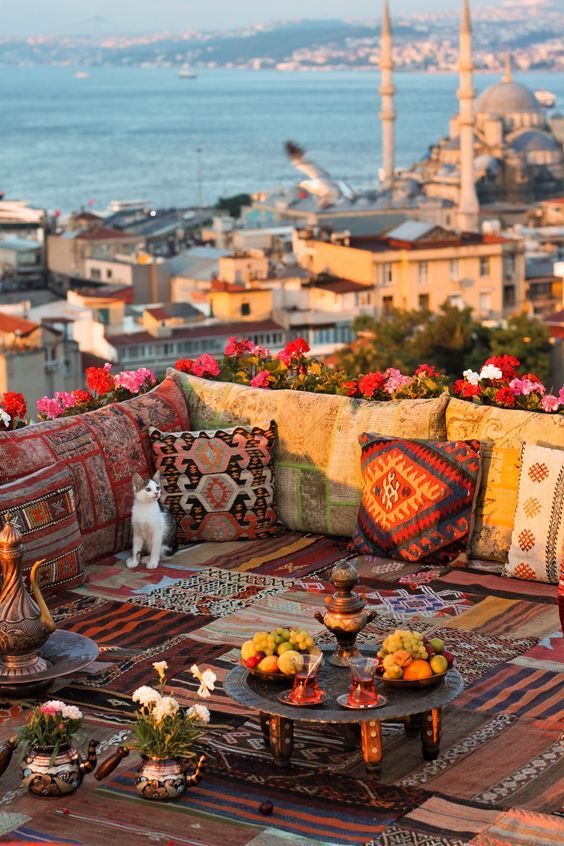
Even though people from other countries might have a ‘bad’ first impression of our country, I think we have a very unique style of architecture. While it can be true that a lot of squatter houses can be seen between here and there, the astonishing architectural buildings shouldn’t be overlooked.
For instance our famous buildings; Camii’s (in other words, the mosques). These are one of our most recognizable structures in the world. These could be great examples of Islamic architecture. They are usually designed with large domes, tall minarets, decorative tiles and detailed calligraphy. Different Islamic arts could also be seen such as hat sanatı (islamic calligraphy), ebru, and çini (decorative tile art) can also be found in or around Islamic buildings. These artistic details make Turkish architecture more distinctive and also culturally rich, far beyond the classic modern architecture nowadays. A significant example for Turkish mosques could be the Blue Mosque for people who are interested.
Diving deeper into Turkish Architecture, there are our remarkable palaces that have a distinctive style next to the other classical buildings or skyscrapers frequently seen among the city. Topkapı Palace located in Istanbul is a palace who has four main courtyards, and is made up of many small pavilions and buildings, not one giant building. It also has large gates between different sections. Its rooms contains İznik Tiles, calligraphy and floral decorations. It includes the Harem, where the royal family lived. It has gardens and terraces overlooking the Bosphorus. Each courtyard becomes more private as you move deeper into the palace. Therefore, Topkapı Palace is a notable structure for Ottoman architecture.
The caravanserais are important places for the traders who need accommodation at night. Here, traders used to get 3 days of free stands where the government covered up all of their needs. These traders usually used this place to sleep, recharge themselves for the next day, trade their goods with other traders from different regions/places and stay safe from external dangers or robberies. Caravanserais reflect our hospitable personality as Turkish people. Caravanserai played a significant role in cultural interaction where traders got to know each other and traded goods. Structurally, caravanserais have really high walls to prevent intruders from breaking in and causing harm. Rocks and sometimes wood are used frequently. Thus, warm beige-yellow colors are more dominant in color. Selçuklu Caravanserais are remarkable examples that are worth checking out.
The Grand Bazaar is a place where people can get to know the Turkish culture. It is very easy to encounter different types of islamic arts, Turkish cuisine (Turkish coffee, spices etc.) while being inside a great example for Turkish Architecture. The Grand Bazaar is built like a giant stone fortress for shopping. It started in the 15th century with two large stone buildings with high, domed roofs. Today, it has grown into a huge maze of over 60 streets. The entire marketplace is covered by long, arched ceilings made of brick and stone. Small windows in the roof let in beautiful beams of sunlight to light up the walking paths below. The bazaar also connects to hidden, two-story open courtyards where traders used to rest, and the whole area is protected by more than 20 big stone gates.
Last but not least I want to talk about The Maiden’s Tower (this building has a very captivating context but I do not want to elongate the blog).The Maiden’s Tower, or Kız Kulesi, is one of Istanbul’s most distinctive landmarks. Located on a small island in the Bosphorus, its architecture combines elements from different historical periods, including Byzantine and Ottoman influences. Its stone base, simple rectangular structure, balcony and pointed roof create an elegant silhouette. Although small, the tower stands out because of its unique location and strong connection to Istanbul’s history and identity. Currently it is used as a restaurant as far as I know.
Although there are so much more to Turkish Culture and Architecture, I can not talk about them all in one blog (it would be too long). To sum up, Turkish architecture is rich, unique and full of history. Mosques, palaces, caravanserais, bazaars and the Maiden’s Tower all show different parts of Turkish culture. Even though modern or poorly planned buildings can sometimes create a negative first impression, Türkiye has many beautiful structures that should not be overlooked.
