
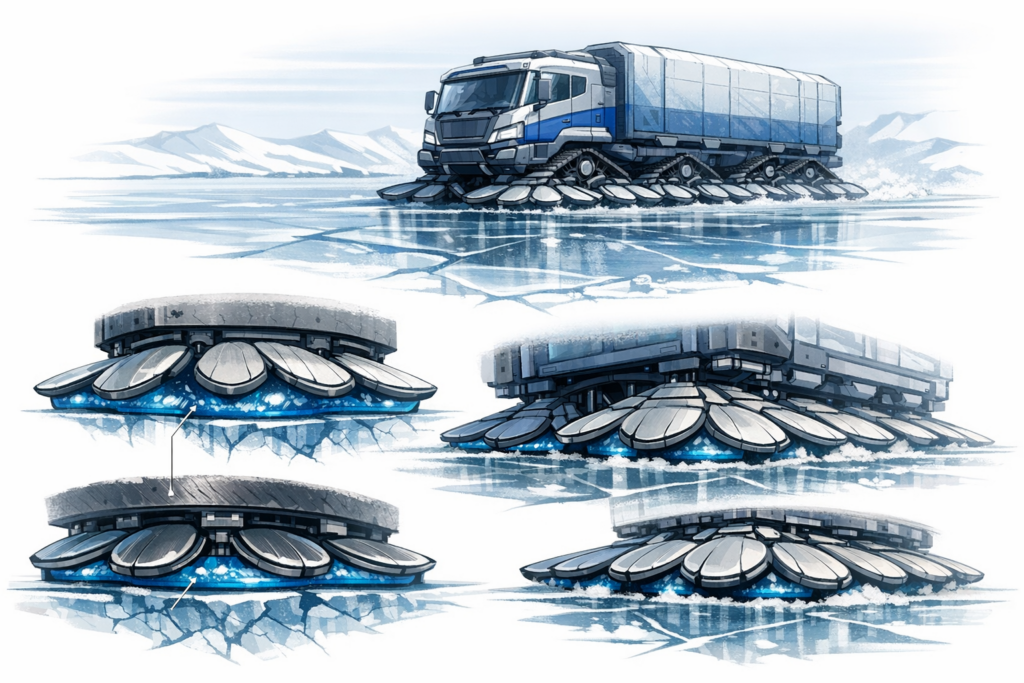
This evening, while I was preparing for my physics project about pressure in solids, I started thinking about a real problem:
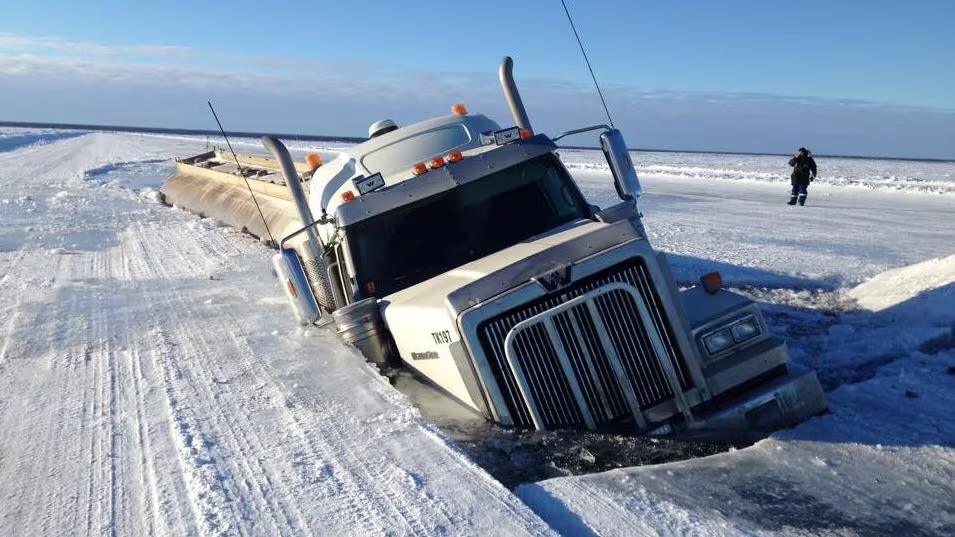
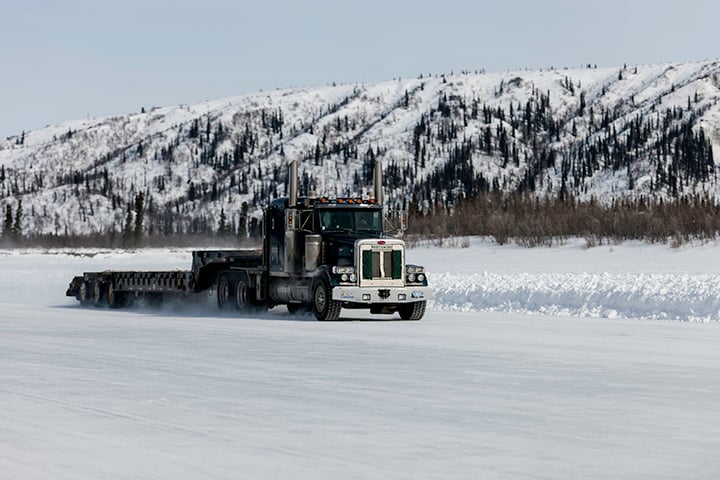
Heavy ice trucks often break the ice while moving.
These trucks are extremely useful in cold regions, but their weight creates a serious danger.
In physics, we learn that pressure depends on two things: force and surface area. Heavy trucks create a very large force, and when this force is applied to a small area, the pressure becomes too high. This is why the ice suddenly cracks.
Instead of trying to make the truck lighter, I asked a different question:
What if we could spread the weight over a much larger area?
The Main Idea
I imagined a truck that does not move with classic wheels.
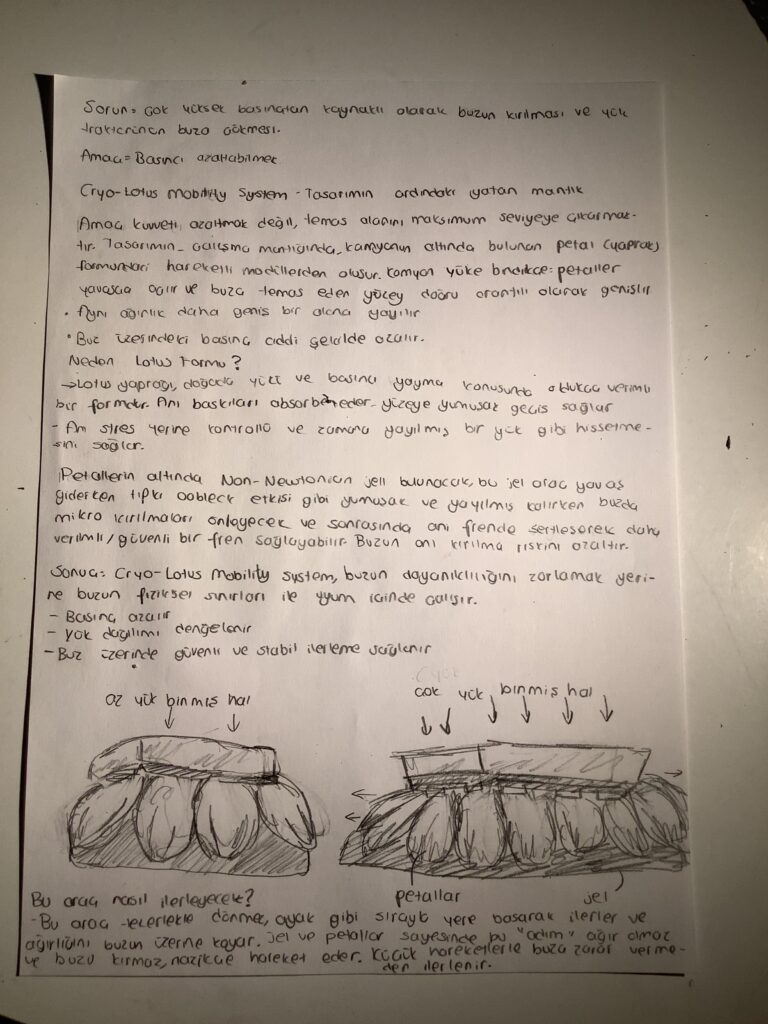
Instead, it moves using wide, flat pads under its body, similar to how people walk on snow using snowshoes.
These pads open, touch the ice, carry the weight for a moment, and then slowly lift as new pads move forward. In this way, the truck moves step by step, not by rolling. This makes the movement slower, but much safer for the ice.
Because the weight is never placed on a single small point, the pressure on the ice is reduced, and the ice has time to adjust instead of breaking suddenly.
The Role of Gel
Between each pad and the ice, I imagined using a non-Newtonian gel. This is a real material that behaves differently depending on how fast force is applied to it.
- When pressure is slow and steady, the gel stays soft.
- When pressure is sudden, the gel becomes stiff.
This helps prevent sudden stress on the ice and makes the movement smoother and safer.
Why This Design Works
This design works because it follows the rules of physics instead of fighting them. The truck does not rush or force its way forward. Instead, it cooperates with the ice by moving slowly, spreading its weight, and avoiding sharp pressure changes.
In conclusion, this concept shows that controlling pressure is more important than reducing weight. By increasing surface area and slowing down movement, heavy vehicles can travel on ice more safely without causing sudden collapse.
Down below I have my thinking process and all the information about my project in the first photo. It is in turkish but my sketch is also shown. (The photo on the cover is AI-generated because I sent the picture down below and told it to create a detailed version of it and some pictures of it on the actual truck).

Wow, this is amazing! Thanks for posting this.
So well written! You make it look easy.
This is brilliant! Keep these posts coming.